

Smartphones have become an essential part of everyday life. People use them to communicate with friends, watch videos, read news, play games, and browse social media. However, using a phone for a long time before going to bed may affect sleep quality and make it harder to get enough rest.
Many people intend to check their phones for only a few minutes but end up scrolling for an hour or more. This habit can delay bedtime, keep the mind active, and expose the eyes to bright light when the body should be preparing for sleep.
Understanding how phone use affects sleep can help you develop healthier nighttime habits and improve your overall well-being.
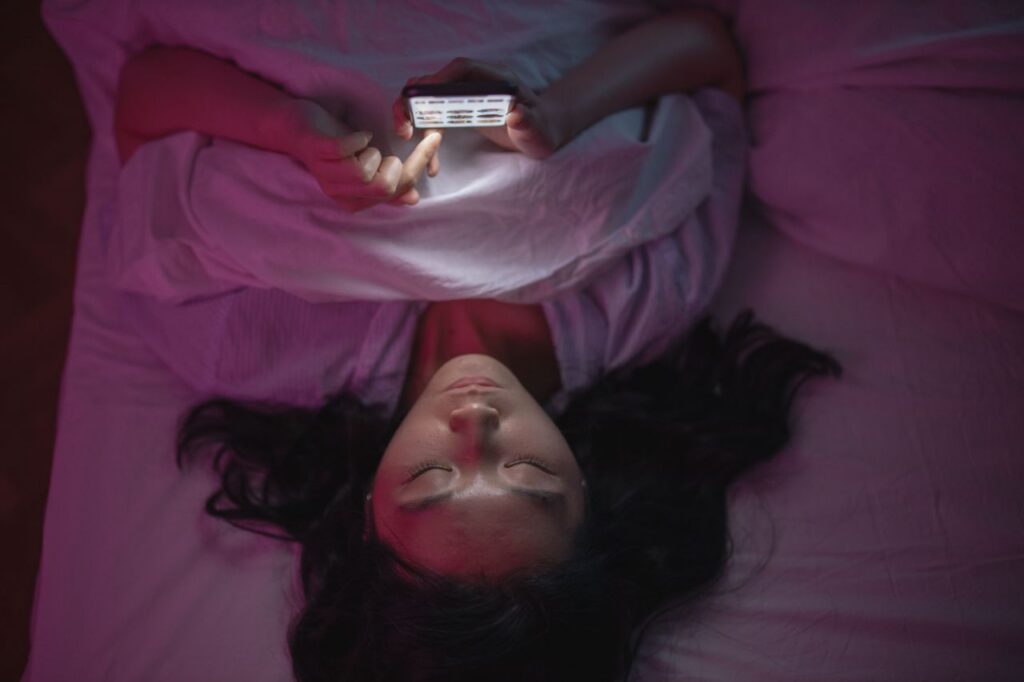
1. Phone Screens Can Interfere With Your Sleep Cycle
One important reason to limit phone use before bed is the light emitted by screens.
Smartphones produce blue light, a type of visible light that can affect the body’s internal clock, also known as the circadian rhythm. This clock helps regulate when you feel awake and when you feel sleepy.
Exposure to light in the evening can interfere with the body’s natural sleep signals. In particular, bright light at night can suppress the release of melatonin, a hormone that helps regulate sleep.
As a result, using a bright phone screen close to bedtime may make it harder for some people to feel sleepy at their usual time.
The effect depends on several factors, including screen brightness, how long you use the device, and your individual sensitivity to light.
What you can do: Reduce your screen brightness in the evening and try to stop using your phone at least 30–60 minutes before bedtime. If possible, spend that time doing a relaxing activity instead.
Learn more from Harvard Health Publishing’s article on blue light and its effects.
2. Scrolling Can Make You Go to Bed Later
Have you ever planned to sleep at 10 p.m. but continued watching videos or browsing social media until midnight?
This is a common problem because smartphones provide an endless stream of content. One video leads to another, and a quick check of messages can turn into a long browsing session.
This behavior can reduce the amount of time available for sleep. Even if you eventually fall asleep easily, going to bed later than planned may leave you feeling tired the next morning.
Adults generally need at least seven hours of sleep per night, although individual needs vary. Regularly getting less sleep than your body needs can affect your energy, concentration, and daily performance.
What you can do: Set a specific time to stop using your phone each night. You can also set an app timer, activate a bedtime reminder, or charge your phone away from your bed.
For more information, read the CDC’s guidance on sleep and healthy sleep habits.
3. Emotional Content Can Keep Your Brain Active
Not all phone use affects sleep in the same way. The type of content you consume can also matter.
Watching exciting videos, playing competitive games, reading upsetting news, or participating in heated online discussions may leave you feeling mentally or emotionally stimulated.
For example, reading stressful news just before bed may cause you to worry about problems that are difficult to resolve at night. Similarly, an intense game may leave you feeling alert rather than relaxed.
When your mind remains active, it may take longer to settle down and prepare for sleep.
This does not mean that every activity on your phone will disturb your sleep. Quiet reading or listening to relaxing audio may be less stimulating for some people. However, interactive activities and emotionally intense content can make it harder to unwind.
What you can do: Choose calming activities before bed. Consider reading a printed book, listening to gentle music, stretching lightly, or practicing slow breathing.
4. Phone Notifications Can Interrupt Your Rest
Even when you are ready to sleep, your phone can continue to demand your attention.
Messages, social media alerts, emails, and app notifications may light up your screen or produce sounds and vibrations. If you wake up and check these notifications, you may find it difficult to return to sleep quickly.
Keeping your phone next to your pillow can also encourage you to check it whenever you wake up during the night.
Repeated interruptions may reduce the quality of your rest and leave you feeling less refreshed in the morning.
What you can do: Activate Do Not Disturb mode or a sleep setting before bed. Allow emergency calls from important contacts if necessary, and silence nonessential notifications overnight.
If you use your phone as an alarm clock, consider placing it on a table away from your pillow. This makes it less convenient to reach for it automatically.
5. Poor Sleep Can Affect Concentration and Productivity
Sleep is important for attention, learning, memory, and emotional regulation. When you regularly fail to get enough sleep, you may find it harder to concentrate, remember information, or complete everyday tasks.
For students, insufficient sleep may make studying and learning more difficult. For workers, it can reduce alertness and make routine responsibilities feel more challenging.
Lack of sleep can also affect mood. Some people become more irritable, impatient, or emotionally sensitive after a night of poor rest.
Phone use before bed is not the only cause of sleep problems, but it can contribute when it delays bedtime or interrupts rest.
What you can do: Make sleep a regular part of your daily routine. Keep a consistent bedtime and wake-up time, and give yourself enough time to rest each night.
If you continue to experience sleep difficulties despite changing your habits, consider discussing the problem with a healthcare professional.
6. Late-Night Phone Use May Encourage Unhealthy Habits
Using a phone in bed can gradually become an automatic habit. You may reach for your device whenever you feel bored, stressed, lonely, or unable to fall asleep.
Over time, this routine can make it difficult to separate bedtime from entertainment and online activity.
For example, if you habitually watch videos in bed, you may begin to associate your sleeping environment with stimulation rather than relaxation. You may also become frustrated when you try to sleep without checking your phone.
Developing a healthier nighttime routine can help you break this pattern.
What you can do: Create a simple bedtime routine that does not depend on your phone. You might take a warm shower, prepare your clothes for the next day, write down tomorrow’s tasks, or read a few pages of a book.
Start with a small change, such as leaving your phone untouched for the final 15 minutes before sleep. Gradually increase this period as the habit becomes easier.
7. Using Your Phone in Bed Can Make It Harder to Relax
Your bedroom should ideally be a comfortable environment associated with rest. When you spend long periods scrolling, working, or watching videos in bed, your mind may begin to associate that space with being active and alert.
For some people, this can make it more difficult to relax at bedtime.
A consistent bedtime routine can help signal that the day is ending and that it is time to rest. Keeping work, entertainment, and social media away from the final part of your evening may make the transition to sleep easier.
What you can do: If possible, use your phone outside the bed and put it aside before you lie down to sleep. Keep your bedroom dark, quiet, and comfortable.
If you cannot fall asleep, avoid repeatedly checking the time or scrolling through your phone. Instead, try a quiet, relaxing activity until you feel sleepy.
8. How Long Before Bed Should You Stop Using Your Phone?
There is no single cutoff time that works perfectly for everyone. However, a practical starting point is to stop using your phone about 30–60 minutes before bedtime.
This gives you time to relax without continuously checking notifications or consuming stimulating content.
You can also follow these simple steps:
- Set a bedtime alarm: Use a reminder to tell you when it is time to put your phone away.
- Reduce screen brightness: Lower the brightness during evening use.
- Use night settings: A night mode or blue-light filter may reduce some blue-light exposure, but it does not eliminate the effects of stimulating content or late bedtime.
- Keep your phone away from your pillow: Place it somewhere that makes unnecessary checking less convenient.
- Build a relaxing routine: Read, stretch gently, listen to calm audio, or prepare for the next day.
- Keep a consistent schedule: Try to go to bed and wake up at similar times each day.
These changes do not need to happen all at once. Start with the habit that is easiest for you to change and build from there.
Conclusion
Using your phone for too long before bed may interfere with sleep by exposing you to evening light, delaying bedtime, stimulating your mind, and interrupting your rest with notifications.
Poor sleep can affect concentration, mood, energy, and daily productivity. Although phone use is not the only factor that influences sleep, creating a healthier nighttime routine can make a meaningful difference.
Try putting your phone aside 30–60 minutes before bedtime, reducing unnecessary notifications, and choosing relaxing activities instead.
Remember: A good night’s sleep begins with the habits you practice before you go to bed. By making small, consistent changes, you can give your body and mind a better opportunity to rest and prepare for the next day.