

Introduction
Success is a goal that many people dream of achieving, but the journey toward success is rarely smooth. Along the way, people often face disappointment, mistakes, rejection, financial losses, and unexpected challenges. These experiences can be painful, especially when someone has invested considerable time, energy, and money into achieving a goal.
However, failure does not always mean the end of the journey. In many cases, it can become an important opportunity to learn, improve, and make better decisions. People who understand their mistakes and take action to correct them often develop valuable skills that help them move forward.
Failure alone does not guarantee success. What matters most is how people respond to it. By examining mistakes, accepting feedback, and adjusting their strategies, individuals can transform setbacks into meaningful learning experiences.
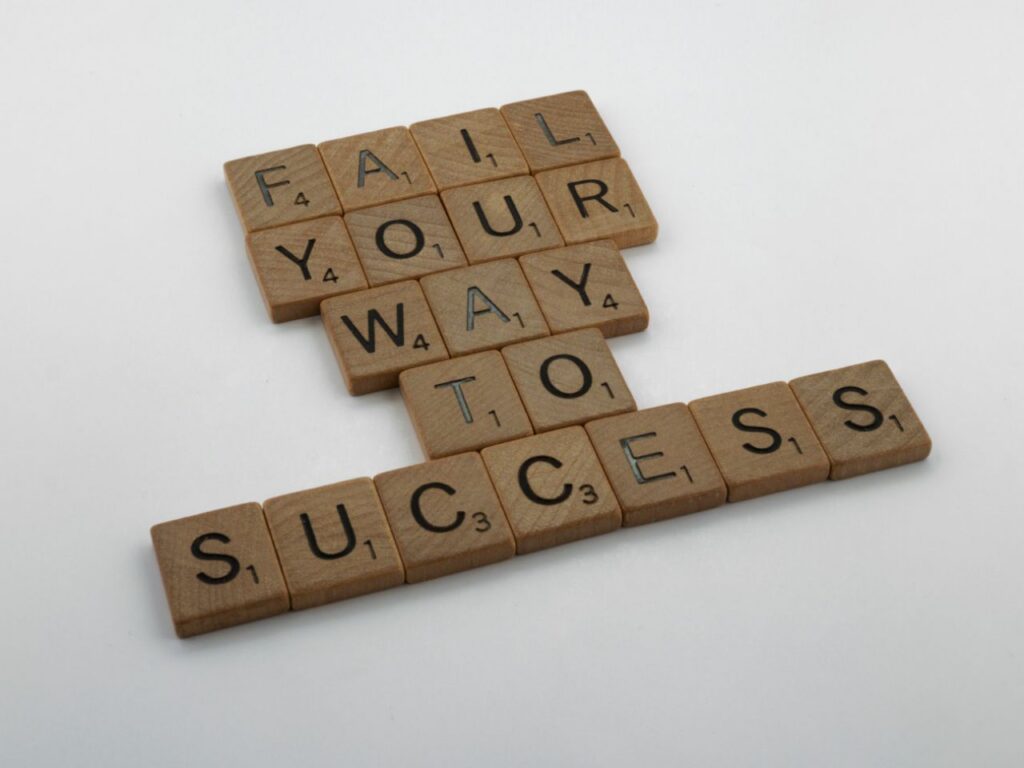
1. Failure Helps Us Identify Our Mistakes
One of the most important benefits of failure is that it reveals what did not work. When everything goes according to plan, people may not recognize weaknesses in their decisions, habits, or strategies. Failure can expose these weaknesses and encourage them to take a closer look at their actions.
For example, imagine an entrepreneur who opens an online store but receives very few orders. Instead of immediately giving up, the entrepreneur can investigate the reasons behind the poor results.
Perhaps the products are too expensive, the advertisements are reaching the wrong audience, or customers do not trust the store because it lacks clear product information. By identifying these problems, the entrepreneur can make improvements and test a better approach.
The same principle applies to education, careers, and personal development. A student who performs poorly on an examination can review the questions they answered incorrectly. An employee who does not receive a promotion can examine their skills and seek constructive feedback.
Failure becomes valuable when it helps people understand the difference between what they expected to happen and what actually happened.
2. Failure Encourages Personal Growth
People often discover their strengths and weaknesses when they face difficult situations. Failure can encourage them to develop patience, discipline, problem-solving abilities, and emotional resilience.
These qualities are important because success often requires people to deal with uncertainty and continue working when progress is slow.
Psychologist Carol Dweck’s research on the growth mindset emphasizes the idea that abilities can develop through learning, experience, and effort. Instead of believing that their talents are fixed, people with a growth mindset recognize that they can improve over time.
You can learn more about this concept through Harvard Business Review’s discussion of the growth mindset.
For example, someone who struggles to learn a new skill may initially feel discouraged. However, by practicing consistently, asking for advice, and learning from mistakes, that person can gradually become more capable.
The important lesson is that a temporary setback does not define a person’s potential. With the right approach, challenges can encourage personal and professional development.
3. Failure Teaches Us to Make Better Decisions
Good decision-making is an essential part of success. Unfortunately, people cannot always predict the outcome of every decision, even when they carefully consider their options.
Failure can provide information that helps people make more informed choices in the future.
Consider a small business owner who invests most of their available money in a product without researching customer demand. If the product does not sell, the owner may discover the importance of market research, budgeting, and testing demand before making a large investment.
The next time, the business owner might introduce a small quantity of products, collect customer feedback, and expand only when the results show sufficient demand.
This approach reduces unnecessary risks and encourages decisions based on evidence rather than assumptions.
According to Harvard Business Review’s article on strategies for learning from failure, organizations need to understand the reasons behind setbacks if they want to improve their future performance.
The lesson is simple: mistakes can help people make better decisions when they carefully examine what happened and apply what they learned.
4. Failure Builds Resilience and Persistence
Resilience is the ability to recover from difficulties and continue moving forward. It does not mean that people never feel disappointed or discouraged. Instead, it means they learn how to manage those feelings and respond constructively to challenges.
People who pursue meaningful goals will probably experience setbacks at some point. A job applicant may be rejected several times before receiving an offer. An entrepreneur may struggle to attract customers during the early stages of a business. A student may need additional time to understand a difficult subject.
These experiences can test a person’s confidence and motivation.
However, persistence should not mean repeating the same mistakes without making changes. Effective persistence combines determination with reflection and adaptation.
For example, if a marketing campaign fails to generate sales, simply spending more money on the same campaign may not solve the problem. A better approach is to review the results, identify weaknesses, and test a different strategy.
By learning to respond to setbacks thoughtfully, people can become better prepared for future challenges.
5. Failure Can Encourage Innovation and Creativity
Many new ideas emerge when existing methods fail to solve a problem. When people discover that a particular approach is ineffective, they may begin searching for alternative solutions.
This process can encourage creativity and innovation.
For businesses, failure can reveal unmet customer needs, weaknesses in existing products, or opportunities to improve services. A company that listens to customer complaints may discover a practical way to make its products more useful.
For individuals, encountering obstacles can also encourage them to think differently. Someone who cannot find a suitable job might develop a new skill, offer freelance services, or explore an entrepreneurial opportunity.
However, innovation requires more than simply making mistakes. People must be willing to examine results, question assumptions, and experiment with better ideas.
Businesses can also benefit from creating an environment where employees can report problems honestly and discuss lessons learned without unnecessary fear of embarrassment.
When mistakes are treated as useful information rather than something to hide, organizations can become better equipped to improve their processes and develop new solutions.
6. Failure Helps Us Appreciate Success
When people achieve a goal after overcoming significant difficulties, they may develop a deeper appreciation for the effort required to reach it.
Challenges can help individuals recognize the value of preparation, patience, teamwork, and consistent improvement.
For example, a person who builds a business from a small operation may develop a stronger understanding of customer relationships, cash flow, and the importance of reliable service. These lessons can influence how the person manages future opportunities.
Similarly, a student who struggles with a subject and eventually understands it may gain confidence in their ability to learn difficult material.
Nevertheless, suffering is not a requirement for success, and people do not need to experience repeated failure to prove their determination. The goal is to learn efficiently, not to create unnecessary difficulties.
Success becomes more meaningful when people understand the work behind it and recognize the lessons that helped them progress.
7. Failure Can Reveal the Need for Change
Sometimes, failure indicates that a person’s current strategy is not suitable for their goals. Recognizing this can prevent them from wasting additional time and resources.
For instance, an entrepreneur may discover that a product has very little demand in a particular market. Rather than continuing to invest heavily in an unsuccessful idea, the entrepreneur can investigate customer needs and consider a different product or business model.
Likewise, a professional who repeatedly struggles in a particular role may benefit from additional training, guidance, or a change in career direction.
Changing direction does not necessarily mean giving up. It can be a practical decision based on new information.
The key is to distinguish between a temporary challenge that can be overcome through improvement and a larger problem that requires a different approach.
People who remain open to change are often better positioned to adapt to new circumstances.
8. How to Turn Failure into a Lesson for Success
Although failure can provide valuable information, people must take deliberate steps to learn from it. The following practices can help turn disappointing experiences into opportunities for improvement.
Step 1: Accept What Happened
The first step is to acknowledge the outcome honestly. Denying mistakes or blaming everyone else can make it difficult to identify the real problem.
Accepting responsibility does not mean blaming yourself for everything. It means recognizing which parts of the situation you can understand, influence, or improve.
Step 2: Identify the Root Cause
Ask yourself several important questions:
- What was I trying to achieve?
- What went wrong?
- Which assumptions were incorrect?
- What factors were outside my control?
- What could I do differently next time?
Answering these questions can help separate the actual causes of failure from emotions or assumptions.
Step 3: Seek Feedback
Other people may notice problems that you have overlooked. Ask a trusted teacher, colleague, mentor, customer, or experienced professional for constructive feedback.
Listen carefully to their observations and consider which suggestions are supported by evidence.
Step 4: Create a Better Plan
Use the information you have collected to identify specific changes. These might include developing a new skill, improving a product, adjusting a budget, or setting more realistic goals.
A good plan should explain what needs to change and how you will measure progress.
Step 5: Take Small, Measurable Actions
Instead of trying to solve every problem at once, begin with manageable steps. Small experiments can help you test whether a new strategy works before committing significant resources.
For example, an online seller can test a new product with a limited budget before ordering a large quantity.
Step 6: Review Your Progress
After taking action, examine the results. If the new approach works, continue improving it. If it does not, use the new information to adjust your plan again.
Learning from failure is an ongoing process rather than a single event.
9. Why Failure Should Not Be Feared
Fear of failure can prevent people from trying new things, pursuing opportunities, or developing valuable skills. Some people avoid challenges because they worry about criticism or believe that making mistakes means they are not capable.
However, avoiding every possible mistake can also limit growth.
A healthier approach is to understand the risks, prepare carefully, and recognize that uncertainty is a normal part of learning and innovation.
This does not mean ignoring serious consequences or taking reckless risks. Financial decisions, business investments, and other important choices should be evaluated carefully. The aim is to take reasonable risks while learning from the results.
People should also remember that failure is an event, not an identity. A failed project does not make someone a failure as a person.
By separating personal worth from individual outcomes, people can evaluate their mistakes more objectively and focus on what they can improve.
Conclusion
Failure can become a powerful lesson for success because it reveals mistakes, encourages personal growth, improves decision-making, and creates opportunities for innovation. It can also help people develop resilience and recognize when they need to change their strategies.
However, failure does not automatically lead to success. The real value comes from examining what happened, accepting useful feedback, and applying the lessons to future decisions.
Whether in business, education, or everyday life, setbacks should not always be viewed as the end of a journey. They can provide important information about what needs to change and how to move forward.
Ultimately, successful people are not necessarily those who never make mistakes. They are often those who remain willing to learn, adapt, and improve.
Remember: Failure is not the opposite of success. When approached with reflection and action, it can become part of the learning process that leads toward it.