

For the past several years, most generative artificial intelligence tools—ranging from complex language models to advanced image generators—relied almost entirely on massive, remote cloud data centers. When users submitted a prompt on their smartphone or laptop, the request traveled across the internet to high-powered server farms before sending the processed answer back.
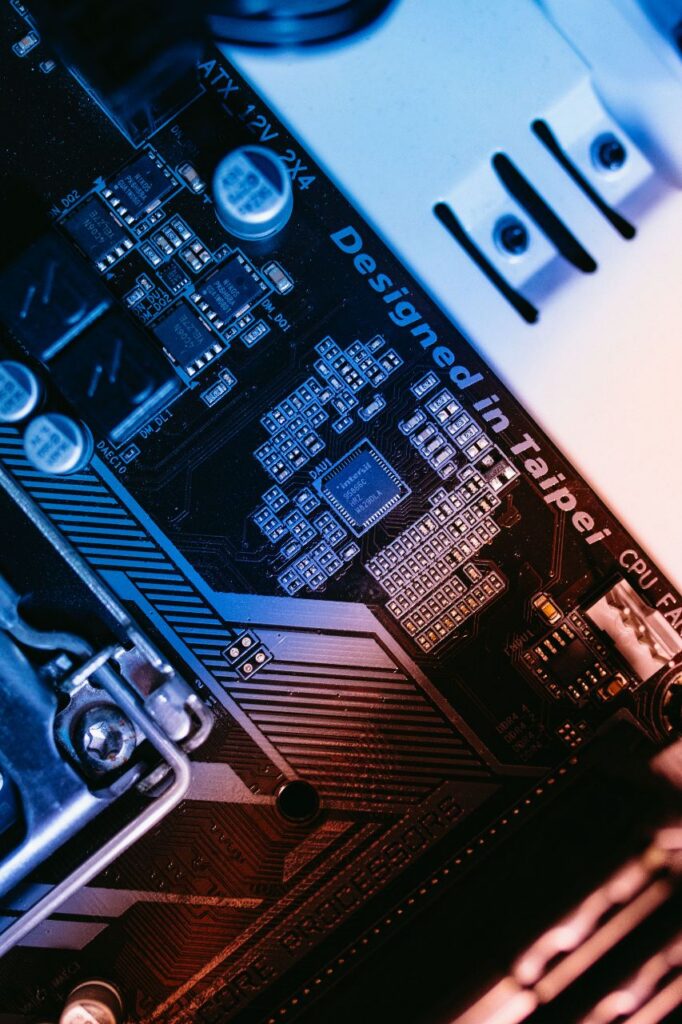
However, a fundamental hardware revolution is currently reshaping the technology landscape: On-Device AI processing. Powered by specialized Neural Processing Units (NPUs) built directly into modern system-on-chip (SoC) architectures, daily consumer devices can now execute complex machine learning algorithms locally, without sending personal data to external cloud servers.
What Is an NPU and How Does It Work?
While traditional Central Processing Units (CPUs) handle general computing tasks and Graphics Processing Units (GPUs) excel at rendering visual media and parallel math operations, Neural Processing Units (NPUs) are purpose-built to accelerate neural networks.
NPUs are optimized specifically for mathematical operations common in deep learning, such as matrix multiplication and low-precision data processing. By offloading AI tasks from the main CPU and GPU, the device achieves dramatically higher processing speeds while consuming a fraction of the battery power.
Key Operational Advantages:
- Zero Latency: Processing data locally eliminates network transmission lag, delivering instant real-time responses for voice translation, image editing, and predictive text.
- Offline Functionality: On-device AI features function seamlessly even when the device is entirely disconnected from Wi-Fi or cellular networks.
- Enhanced Energy Efficiency: Local hardware execution reduces heavy data transmission, preserving battery life on ultra-portable laptops and mobile devices.
As detailed in technical analysis by the MIT Technology Review, shifting AI workloads from energy-intensive cloud facilities to efficient local hardware represents a major step toward sustainable digital infrastructure.
Transforming the Smartphone Experience
Smartphones are the primary digital gateway for billions of people worldwide. The integration of advanced NPUs into modern mobile processors has unlocked capabilities that were previously impossible on handheld devices.
1. Real-Time On-Device Language Translation
Modern smartphones can now perform bidirectional audio and text translation during live phone calls or face-to-face conversations. Because the translation model resides directly on the device hardware, conversations remain completely private and process instantaneously.
2. Computational Photography and Generative Editing
Camera software relies heavily on local AI chips to optimize exposure, remove visual noise, and perform instantaneous semantic segmentation—identifying skin tones, skies, and background elements in real time. Furthermore, generative removal tools allow users to erase unwanted objects or expand image borders directly inside photo gallery apps.
3. Proactive Contextual Assistants
Instead of relying on basic keyword searches, local AI engines continuously analyze user context—such as calendar appointments, messaging threads, and location history—to provide helpful daily summaries and automated reminders without compromising personal privacy.
The Rise of AI PCs and Modern Laptops
The personal computer market is undergoing its most significant structural shift in decades. Modern desktop and laptop processors now feature dedicated silicon sections specifically reserved for artificial intelligence acceleration.
- Live Video Enhancements: Local NPUs process real-time background blur, gaze correction, and automatic noise cancellation during video conference calls, drastically reducing CPU load.
- Intelligent Document Summarization: Users can summarize massive PDF files, extract key insights from complex spreadsheets, or search local file directories using natural language queries—all performed locally without internet access.
- Developer Workflows: Software developers and creators can test, fine-tune, and run open-source machine learning models directly on their personal workstations without paying expensive cloud API hosting fees.
Privacy and Security: The Ultimate Advantage of Local AI
Beyond speed and efficiency, the most compelling argument for on-device AI is data privacy. When personal data—such as financial records, private family photos, or medical notes—is processed entirely on local silicon, it never leaves the user’s physical possession.
Cloud-based AI services inherently require users to upload personal inputs to corporate servers, creating potential cybersecurity vulnerabilities and data leakage risks. On-device processing ensures that user biometric profiles, private messages, and browsing behaviors remain protected behind device-level encryption.
What Lies Ahead for Consumer Hardware
As semiconductor foundries continue to shrink transistor sizes and optimize chip architecture, on-device AI capabilities will expand exponentially. Future consumer devices will run increasingly capable multi-modal AI models locally, allowing seamless integration of voice, vision, and text processing in everyday wearable technology, smart home devices, and automotive systems.
Final Thoughts
The shift toward on-device artificial intelligence represents a major milestone in personal technology. By embedding dedicated neural processing units into smartphones and PCs, chip designers are delivering a faster, more efficient, and fundamentally more private digital experience for users across the globe.